Surfing in Santa Teresa, Costa Rica: My Honest Guide (2026)

You’re probably wondering what surfing in Santa Teresa, Costa Rica, is actually like.
Honestly? It’s pretty damn good. But here’s what most guides won’t tell you: the surf level here is high. Santa Teresa caters to every level, but only if you know where to go and which conditions to wait for. (If you’re still comparing towns, my guide to the best surf spots in Costa Rica covers the whole coast.)
I’ve been surfing for about 10 years and I ride a shortboard, so when I call a wave big and powerful, that’s my frame of reference. Adjust it to your own.
I ended up spending almost four months here. It was low season, so the crowds were small and the waves were consistent. On top of that, there’s a real social life and solid infrastructure for working remotely as a digital nomad. Extending was an easy decision.
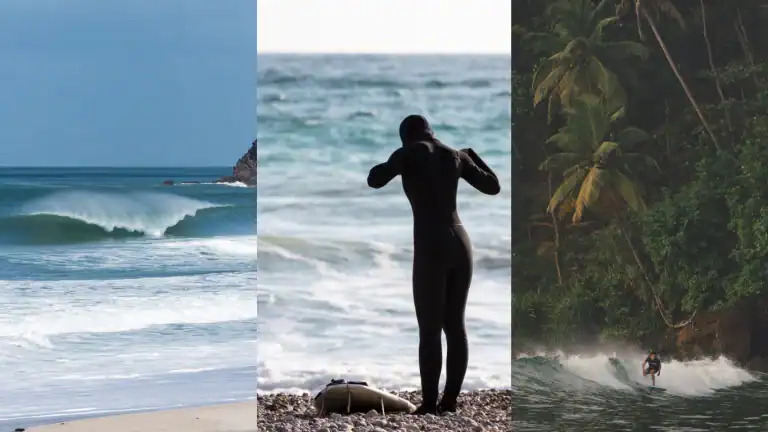
One session pretty much sealed it: a 6–8 ft day at Playa Santa Teresa, big and powerful, with perfect wind.
What surprised me most is how undeveloped the place still is. A gas station only recently opened about 15 minutes from town, and plenty of spots still have no proper road leading to them. It’s rough around the edges, and that’s exactly the beauty of it.
So here’s my honest, first-hand guide to surfing in Santa Teresa.
TL;DR: Surfing in Santa Teresa
- Best time to surf: rainy season (May–November) for bigger south swells, dry season (December–April) for smaller, mellow waves
- Main surf spots: Playa Santa Teresa, Playa Carmen, Playa Hermosa
- Beginners: Playa Mar Azul and Playa Cabuya at high tide
- Where I stayed: Zeneidas Surf Garden
- Budget: about $450/month for a dorm bed in low season
- Getting there: about 7 hours and $25 from Jacó by bus and ferry
Affiliate Disclosure:
Heads Up! Some links on this website are affiliate links. This means if you click on them and make a purchase I earn a small commission. No extra cost for you! Don’t worry I won’t promote anything I won’t buy myself! This helps keep the chase alive!
Is Santa Teresa Good for Beginners?
Yes, Santa Teresa is good for beginners, if you know where to go and when.
The catch is that the swell here is often bigger and more powerful than beginners expect. From the beach it can look easy, but once you paddle out it’s a different story. I’ve seen a lot of beginners struggle out there, and sometimes it ends in injuries or accidents.
My rough cutoff: once it’s around 6 ft or bigger, beginners should sit it out at the main beach. That number shifts with your skill level, but if you’re asking yourself whether it’s too big, it probably is.
Tide matters just as much as size. Generally, high tide is best for beginners. There’s more water over the sand bottom, so the waves break softer and more forgiving. Spots like Playa Cabuya and Playa Mar Azul are great beginner options, but they need high tide. On low tide the reefs are exposed and they’re basically unsurfable.
Beginner rule of thumb: high tide, under about 6 ft, and a sheltered spot like Mar Azul or Cabuya. If all three line up, you’re in for a good session.
If you’re just starting out, take surf lessons in Santa Teresa for your first few sessions. A local instructor will know which spot and tide fit your level on any given day. And before you go, read through these surfing tips for beginners.
Book a surf lesson: most lessons in Santa Teresa run about 90 minutes and include the board. A good instructor will pick the spot and tide that fit your level on the day.
Best Surf Spots in Santa Teresa
While Santa Teresa is a small town, the coastal road stretches about 8–12 km from Playa Mal País to Playa Hermosa. That’s a lot of beach and a lot of potential waves. I’ll cover the three main ones here and leave the lesser-known spots for you to find.
| Beach | Best size | Best for | Watch out for |
|---|---|---|---|
| Playa Santa Teresa | Any size | The most consistent, powerful waves | Dumpy shorebreak, rips, crowds |
| Playa Carmen | 2–6 ft | Small to medium days | Shallow reefs, strong currents |
| Playa Hermosa | Handles bigger swells | Bigger days | Rocks at low tide, rips |
1) Playa Santa Teresa
This is the heart of surfing in Santa Teresa, and my personal favorite. It picks up the most swell and has the most consistent waves on this stretch of coast. It’s the most powerful and the most challenging of the three, which is exactly why I love it.
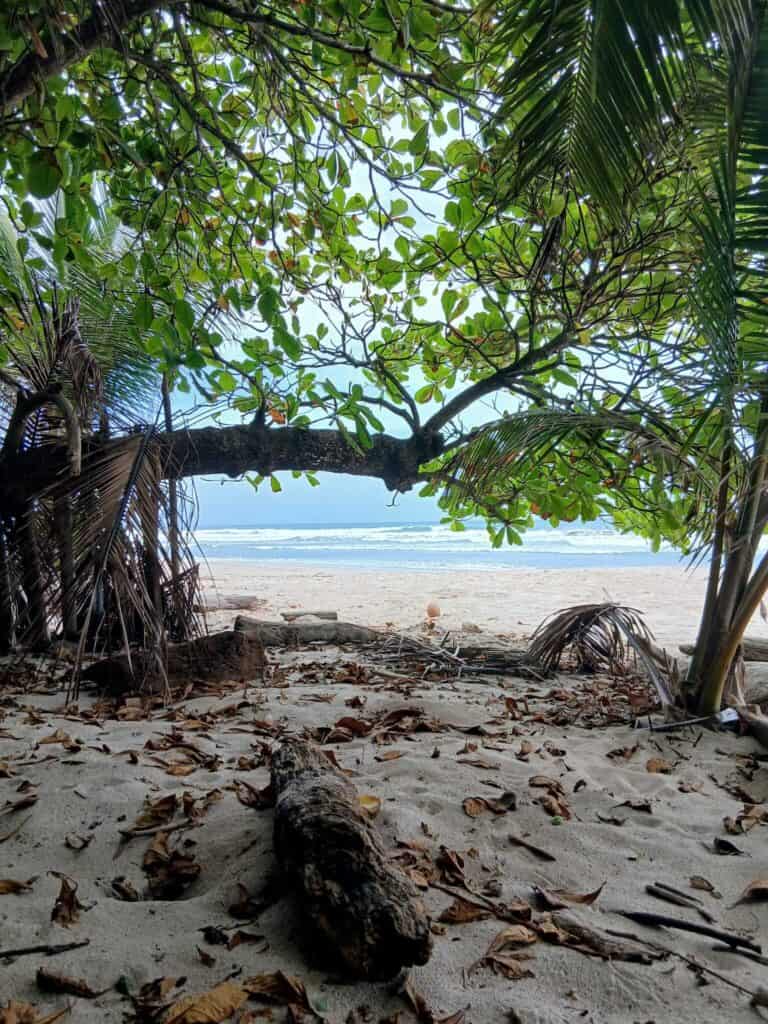

- Best conditions: mid to high tide, any size
- Crowds: the busiest beach, with most of the crowd on two peaks, Zeneidas and La Lora. It’s usually packed from dawn until 9–10 am and again before sunset.
- Hazards: dumpy shorebreak, powerful rip currents, and crowds
My crowd hack: paddle out around 9–10 am if the tide allows. A lot of people are coming in after surfing for a couple of hours, and the wind hasn’t kicked in yet. That gives you a window of 1–2 hours, sometimes more, with far fewer people in the lineup.
2) Playa Carmen
Playa Carmen is usually less powerful than Santa Teresa but still challenging on the right day. It works best at mid to high tide, roughly 2–6 ft. In my experience, once it gets bigger than that, Carmen doesn’t hold the wave as well as Santa Teresa does. My guess is it has something to do with the deeper-water reefs, but that’s my take, not a fact.
Hazards: shallow reefs and strong currents.
3) Playa Hermosa
Hermosa is similar to Carmen in power and character, but it handles larger swells better. Like the other two, it’s best at mid to high tide.
Hazards: rocks exposed on low tide and strong rip currents.
The Best Time to Surf in Santa Teresa
Santa Teresa gets year-round waves, so you really can’t go wrong with any month. What changes is the size and character of the surf.
Rainy season (May–Nov)
South swell season. If you want bigger, more challenging waves, this is when to come. The biggest days I saw were 3 m+ on the forecast apps, which in reality felt more like 4–5 m. The last swell like that came through in August.
Dry season (Dec–Apr)
Relies on north swells. Those travel a long way before reaching Costa Rica and the rest of Central America, so they lose a lot of energy and size. Expect smaller, more mellow waves, which is great news for beginners.
In the rainy season there’s a clear daily pattern: glassy mornings, onshore afternoons, and the occasional glass-off sunset session. It doesn’t happen every day, but when it does, the sunsets are unreal.
If I had to pick, July–August is a great window. There are more travelers around, probably because of the Northern Hemisphere summer holidays, so the town has more going on socially. If you’re flexible on where to go, my surf destination by month guide can help you plan around the seasons.
How I track the surf: I used Surfline and Windy for swell, wind, and rain. Both are on my list of must-have surf travel apps.
Where to Stay in Santa Teresa
I stayed at Zeneidas Surf Garden, and it was so good I ended up living there for a month. I just kept extending. It’s really close to the beach, it’s super clean, the vibe is great, and it’s full of good people. If you’re after a budget surf hostel, this is the one. After my month there, I moved into a private studio-style apartment at Salty Enthusiast for the rest of my stay.
In a rush? Here’s where I’d stay: Zeneidas Surf Garden. Close to the main peaks, clean, social, and you can rent a board on site.
- Which area? Stay in the central part of town and you get the best of everything: close to the most consistent breaks and close to the parties.
- What it costs (low season): I paid $450 per month for a bed in a shared dorm. For the private studio at Salty Enthusiast, I paid $700 for the first month, then negotiated it down to $600 a month after that, everything included, plus a cleaner once a week.
- Heads up: there are a lot of bugs, insects, and animals here; also bring mosquito repellent. The roads get dusty, especially in dry season. Some dorms and private rooms don’t have AC, so if you can handle the heat, those are cheaper per night.
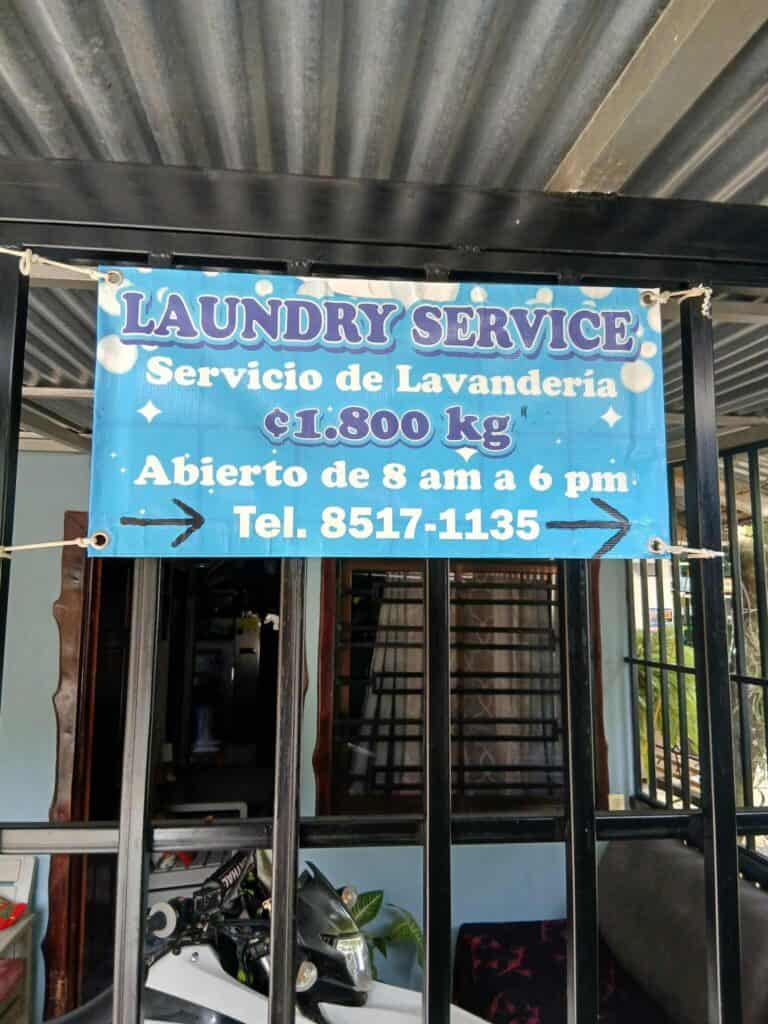
- Laundry: Laundry services are available around town, and you pay by weight. Expect around ₡1,800 (about $3.50) per kilo on the low end. The business in the picture was the cheapest laundry I found around town. Here’s their location.
Trying to stretch your money further? My budget surf trip guide has more ways to save. Here are my top picks:
1) Zeneidas Surf Garden

My home for a month. It’s only 400 m from the beach, with easy access to the main peaks. Besides shared dorms, they have family rooms with shared bathrooms and an entire holiday house. There’s a shared lounge with a TV and library, a communal kitchen, free Wi-Fi, and surfboard rental right on the property.
The nearest airport is Tambor (about 17 km). You’ll need to arrange your own transport, either a taxi from the airport or a rental car.
2) Somos
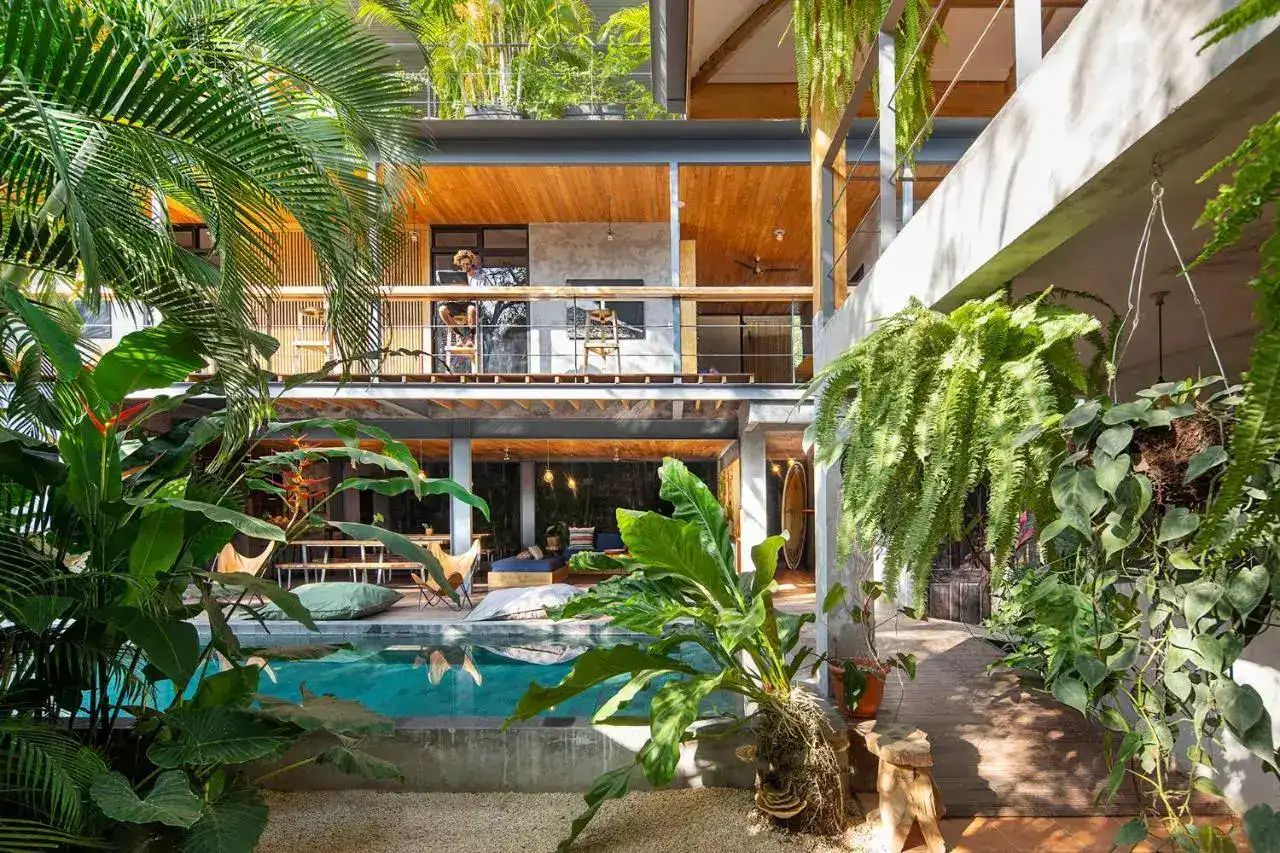
Situated only 200 m from the beach, Somos is a short walk to Playa Santa Teresa. They offer everything from shared dorms to ensuite private rooms, so it works for everyone. If you’re not surfing, you can chill at the pool right in front of the hotel. There’s free parking, a restaurant and bar, and even a pool table.
The nearest airport is Tambor (about 25 km), and the hotel offers a paid shuttle from the airport.
3) Surf Paradise
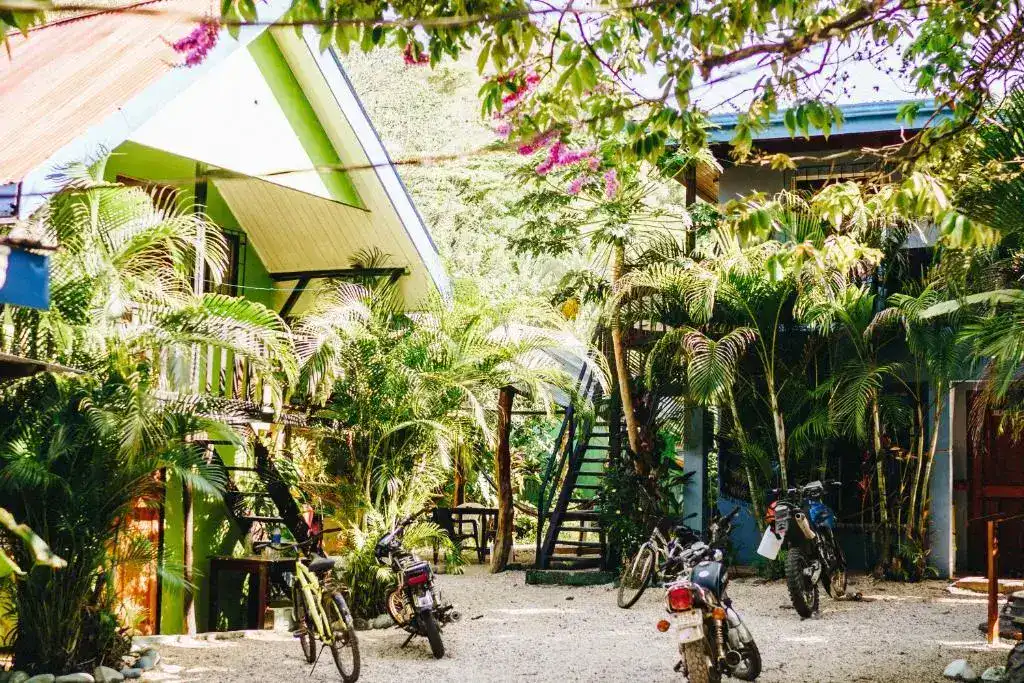
Surf Paradise is only 400 m from Playa Santa Teresa and 500 m from Playa Carmen, which makes it perfect if you want to explore different surf spots. Some units have a balcony with a garden view, while others have their own stove, fridge, and toaster. If you’re looking to save some cash, you can also book a bed in a dorm.
It’s about 25 km from Tambor Airport, and you’ll need to get there independently. A rental car or a taxi from the airport is your best bet.
How to Get to Santa Teresa
Santa Teresa sits on the southern tip of the Nicoya Peninsula, and getting here is part of the adventure.
I came from Jacó by public bus and ferry, with my surfboard. The whole trip cost about $25 and took around 7 hours:
- Bus from Jacó to Puntarenas
- Ferry across the gulf to Paquera
- Bus from Paquera to Cóbano
- Local bus from Cóbano to Santa Teresa
It’s the cheapest route by far, but it’s long, hot, and takes patience. I did plenty of days like this while backpacking Central America with a surfboard. If you’d rather skip that, there are shuttles, private taxis, and speed boats.
Flying into San José? You can pre-book a private transfer from the airport straight to Santa Teresa. It takes around 5 hours, and the driver handles the ferry or the long road around, so you can rest after your flight.
Want more freedom? Renting a car lets you drive yourself and explore the beaches around the peninsula at your own pace. You can compare rental car prices on DiscoverCars.


Traveling with a board? Without one, this route costs about half. The boards alone cost me around $11 across all the buses. Worth it for the freedom of surfing my own board, but budget for it.
Surf Camps in Santa Teresa
Full disclosure: I didn’t do a surf camp in Santa Teresa myself. I came with my own board and 10 years of surfing behind me. But I met plenty of people who did, and here’s what I heard from them, along with what each camp offers.
A surf camp makes the most sense if you want to fully commit to getting better at surfing without planning anything. Accommodation, surf lessons, and usually some extra activities are bundled together, so all you do is book and show up.
1) Pura Vida Surfers
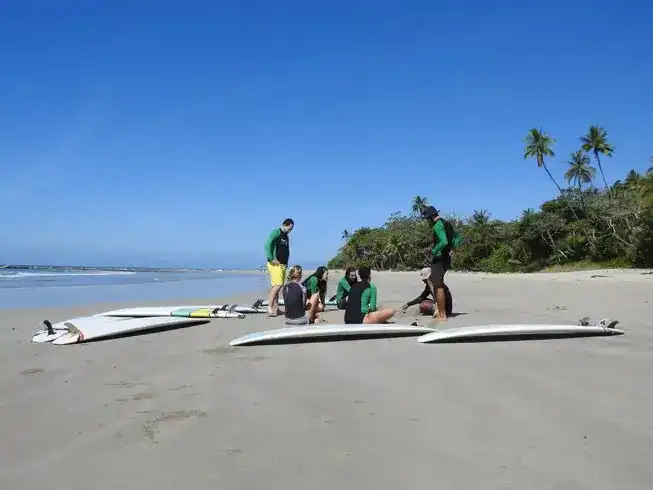
This 7-day camp is as much about the Pura Vida lifestyle as it is about surfing. It suits all skill levels, and lessons are in English or Spanish. Groups are capped at 10 people with 3 instructors, which is a great ratio. It means you get real personal guidance in the water instead of fighting for the coach’s attention.
2) La Posada Surf Camp
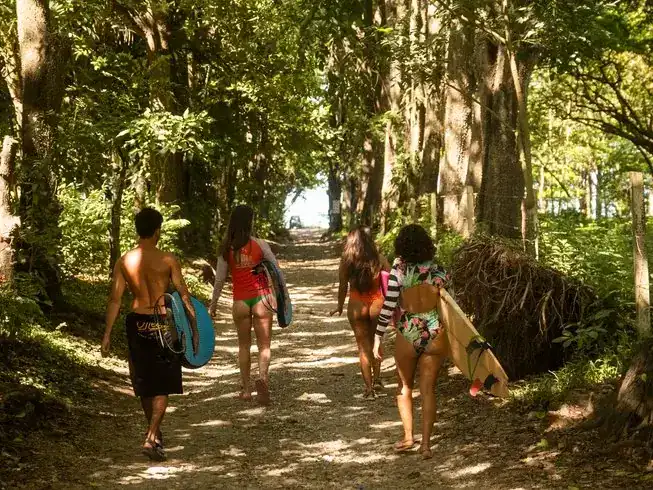
La Posada combines surfing with yoga, so it’s a good pick if you’re looking for a surf and yoga retreat rather than a pure surf trip. Lessons are in English, and the instructor also speaks Spanish. They offer airport transfers at an extra cost, which really seals the deal if you don’t want to plan anything at all.
There are shared rooms for 6 people and private rooms for 2–4, all with AC, a garden view, and a private bathroom (shared with your roommates in the dorms). There’s also a common area, a kitchen, a pool, and a billiards and ping pong table.
3) Surf Camp Zeneidas
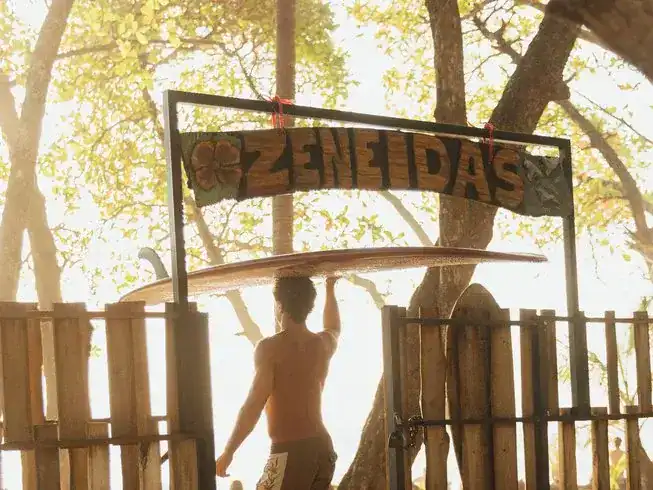
I lived at Zeneidas for a month, so I can vouch for the place itself, even though I didn’t join the camp. Their surf camp runs for 7 days with 5–14 participants. Accommodation ranges from private rooms with shared facilities to fully private apartments, which is great for couples or anyone who wants privacy. Either way, you’ll wake up to the sound of waves on the shore.
What to Pack for Your Surf Trip
- Surfboard. I brought my own because I like the freedom of having it. For a short trip, surfboard rental is easy: usually $15–25 per day, and probably cheaper weekly or monthly. But if you’re staying more than two or three weeks, I strongly recommend bringing your own so you can explore other breaks whenever you want.
- Wax, sunscreen, and zinc. You can find all of these in town, but they’re usually more expensive here than almost anywhere else. Pack them from home (here’s how to wax a surfboard if you’re new to it). Zinc for your face is a must under this sun.
- Rash guard. Very important, especially in the middle of the day.
- Surf hat. Also very important. You’ll thank me after your first long session.
- A couple of board shorts. At least two, so you can switch between a dry pair and a wet pair.
- An eSIM. Set one up before you land so you have data for maps and surf forecasts straight from the airport. An Airalo Costa Rica eSIM installs in a few minutes on most newer phones.
For the essentials I bring everywhere, see the 5 things I pack for every surf trip.
Surf Safety and Etiquette
Surfing in Santa Teresa is not to be taken lightly, especially when the waves are big and strong. Rip currents, wipeouts, and shallow sandbars are all part of surfing here, so be careful and know your limits. I don’t take this stuff lightly after my own near-drowning experience.
Lifeguards. Luckily, there are lifeguards along the whole beach, with three or four lifeguard towers that are always on the lookout. If I remember correctly, in the rainy season they’re on duty from 8 am until sunset.
Localism. Overall it’s very chill here, but you will see a lot of locals in the lineup. If you get in their way, you might get yelled at or told to get out of the water. I’ve personally seen someone get punched and told to leave the water by a local. I don’t know what led up to it. I just saw it happen in front of me and went to surf a different peak.
Respect the locals: give them their space. The beach is massive and there are plenty of peaks to ride. If you see people shouting or looking for trouble, just paddle to the next peak and enjoy your session.
For more on staying safe in the water anywhere you travel, here are my 17 surf safety tips.
Things to Do in Santa Teresa When There’s No Surf

Flat days happen, and there’s plenty to do when they do. Here’s how I spent mine. If you’d rather have it all organized for you, you can browse tours and activities in Santa Teresa on Viator.
Montezuma Waterfall
A must. It’s an easy trip from Santa Teresa and a great way to spend a flat day.
Hike Cabo Blanco
If you’re a serious hiker, Cabo Blanco is about a two-hour hike, but it’s very rewarding. You’ll see a lot of animals along the way.


Montezuma and Cabo Blanco are both easy day trips if you have your own wheels. Having a car also makes it easy to explore the quieter beaches around the peninsula, so it’s worth comparing rental car prices before your trip.
Visit the Tide Pools

Visiting the low-tide pools at Playa Mar Azul and Mal País is a must-do. They’re very close to Santa Teresa, literally 5–7 minutes by scooter or ATV.
Visit Tortuga Island
If you want a full day off the board, Tortuga Island is one of the most popular trips from Santa Teresa. It’s a small island in the Gulf of Nicoya with white sand, clear water, and a volcanic reef that’s great for snorkeling.
Most tours pick you up in Santa Teresa, drive you to Montezuma, and take a boat out to the island from there. Expect a full day with snorkeling, lunch on the beach, and free time to swim or relax. Between July and November, keep an eye out on the boat ride, since dolphins and even humpback whales are often spotted.
Eat at the Local Sodas
A soda is what Costa Ricans call a small, usually family-run local restaurant. It’s where you’ll find the classic casado: rice, beans, salad, and plantains with your choice of chicken, fish, or meat. Eating at sodas is also the easiest way to keep your food budget under control in a town that’s gotten pricey. These are my three favorites in Santa Teresa.
1) Soda Tica Linda
Soda Tica Linda is in the center of town, just south of the soccer field, which makes it an easy stop after a session at Playa Santa Teresa. It’s one of the best-rated sodas in town on Google, and for good reason: honest Tico food, big plates, and fair prices. If it’s your first soda, start with a casado and pick your protein.
2) Soda Pura Vida
Soda Pura Vida is on the north side of town, a short walk from Zeneidas, so it’s a natural pick if you’re staying up that way. Besides casados, they do rice dishes, patacones (fried green plantains), burritos, and fresh fruit smoothies, which hit the spot after a long session in the heat. It fills up at peak hours, so expect a short wait.
3) Soda Soy Tico
Soda Soy Tico sits between the other two, right in the middle of town. Same winning formula: a big plate of classic Costa Rican food at a fair price, close enough to the beach that you can walk over between surf sessions.
Budget tip: don’t expect $5 meals. A plate runs about $10, but you get a huge portion that sometimes lasts for two meals.
Watch the Sunset

Costa Rica’s Pacific coast faces west, so sunsets are a daily event. The best spots are Playa Mar Azul and Playa Santa Teresa.
Take an ATV Tour
There are plenty of ATV tours around the peninsula, and it’s a fun way to see the rougher, roadless parts of the area.
Conclusion: My Final Advice
If you’re thinking about surfing in Santa Teresa, definitely do it. I’d recommend anyone coming to Costa Rica to spend at least a couple of days here, even if you don’t surf, but especially if you do.
I’ll definitely come back. In fact, I’m currently deciding whether to make Santa Teresa my base, so I might be a little biased.

Who shouldn’t come? If you want a polished resort vacation, this isn’t it, at least not yet. Santa Teresa is rustic. You’ll share your space with monkeys, lizards, and insects, and the trip here is long. A lot of things here take some work, even getting here. But if you love nature and good waves, that’s exactly the beauty of it.
Whether you’re booking a place to stay or a surf camp, respect the locals, stay safe in the water, and enjoy the Pura Vida lifestyle. And if you’re continuing your trip, here’s my guide to the top surf destinations in Central America.
Frequently Asked Questions
Is Santa Teresa good for beginner surfers?
Yes, if you pick the right spot and conditions. The main beach can be powerful, so beginners do best at Playa Mar Azul or Playa Cabuya at high tide, ideally on days under about 6 ft. Taking a few surf lessons first helps a lot.
When is the best time to surf in Santa Teresa?
You can surf Santa Teresa year-round. The rainy season (May to November) brings bigger south swells for experienced surfers, while the dry season (December to April) has smaller, more mellow waves that suit beginners.
Can you rent a surfboard in Santa Teresa?
Yes. Surfboard rentals usually cost $15 to $25 per day, and weekly or monthly rates are cheaper. Some hostels, like Zeneidas Surf Garden, rent boards on site.
Should I bring my own surfboard to Santa Teresa?
If you’re staying more than two or three weeks, bringing your own board is worth it and gives you the freedom to explore. For shorter trips, renting is easier. Just budget for board fees on buses if you travel by public transport.