Best Surf Travel Insurance: The One I Use (2 Claims Paid) + 3 Alternatives

I’ve been surfing my way around Central America, Australia and the Mediterranean for a long time now, and the best surf travel insurance for me has been the one I actually pay for every month: SafetyWing. I’ve filed two claims with it. Both got paid back in full.
I didn’t start there. For years I just bought travel insurance in my home country. The problem is you can usually only buy it while you’re at home, and it’s capped at six months or a year. I used up my full year, they wouldn’t give me another one, and I was still on the road. So I had to find a global policy fast.
I compared World Nomads, SportsCover Direct, Genki, Surf Travel Insurance (STI) and SafetyWing. Below is the one I picked, the alternatives I’d still look at, and one I’d skip for a surf trip. Still planning the trip itself? Start with how I plan every surf trip.
In a Rush? The Best Surf Travel Insurance I’d Buy
SafetyWing Nomad Insurance Essential is the surf travel insurance I use. Surfing is included on the Essential plan, I pay about $60 a month, and I can cancel whenever I want. You can also sign up when you’re already abroad, which is exactly what I needed.
🤙 What I actually use
Two claims, two full refunds. Surfing covered on the basic plan, and a monthly fee I can stop anytime.
TL;DR: Surf travel insurance
- What I use: SafetyWing, best for long surf trips and digital nomads.
- Bringing expensive boards: World Nomads, because it has proper gear cover.
- UK surfers: SportsCover Direct, a sports specialist that covers surfing and even contests.
- Aussie surfers: Surf Travel Insurance (STI), which covers surfing automatically.
- Watch out for: policies that drop surfing if it’s the “main purpose” of your trip, and board damage that happens while you’re surfing.
Heads up: some links in this post are affiliate links. If you buy through them, I earn a small commission at no extra cost to you. 🤙
Best Surf Travel Insurance Compared
Here’s how the four stack up for a surf trip. Each provider sells a different policy depending on where you live, so always get the quote for your own country.
| Insurance | Best for | Surfing | Evacuation | Board cover | The catch | Quote |
|---|---|---|---|---|---|---|
| SafetyWing (my pick) | Long trips and nomads | Included on Essential | Up to $100,000 lifetime | No dedicated board cover | Theft of gadgets is an add-on | Check current price |
| World Nomads | Trips with expensive boards | US: included. UK: needs an upgrade | US Standard plan: $400,000 | Yes, inside the gear limit | Pricier for long trips | Check current price |
| SportsCover Direct | UK surfers | Included, even contests | £10m medical and repatriation | £200 to £600, with an excess | Low board limits | Check current price |
| Surf Travel Insurance (STI) | Australian surfers | Included automatically | Depends on the plan | Yes, except while surfing | Insurer changed in Sept 2026 | Check current price |
Why Surf Trip Travel Insurance Is a Must
Travel insurance is a must even if you don’t surf. If you do, it’s not optional. Surfing is a high-risk sport, and going without insurance is just hoping you’ll be fine.
In places like Central America or Sri Lanka, even an infection developing from a minor reef cut can turn into inpatient treatment and a week in hospital. Add fractures and dislocations, spinal injuries, injuries from colliding with other surfers and boards, dengue fever in the rainy season, or scooter accidents on the way to the break, and the bills add up fast.
A $2,000 bike crash
A girl I know here in Costa Rica had a bike accident. Getting to the hospital and getting stitched up cost her about $2,000 out of her own pocket. That one story alone is enough to make me want insurance wherever I am.
And if you want a reminder of how fast a normal session can go wrong, here’s the day I nearly drowned surfing El Sunzal. I’ve also written up what I’ve learned about surf injuries abroad.
What Surf Travel Insurance Should Actually Cover
Some travel insurance lists surfing as an “extreme sport” or makes it an add-on. So the first thing I do is search the policy for the word surfing. If it isn’t there, I move on.
- Emergency medical expenses. The big one. Hospital, stitches, MRI or CT scans, dental emergencies.
- Emergency medical evacuation. Lots of good waves are a long way from a good hospital, and getting you moved can cost more than the treatment.
- Surfboard coverage. Airlines break boards, and a board bag, wetsuit and fins add up. Check the per-item limit, whether surfing equipment in transit is covered, and whether they pay the replacement value or an older, depreciated value. Most policies won’t pay for damage that happens while you’re surfing, though.
- Theft cover. Phones and wallets go missing on surf trips. More on that in my story below.
- Trip cancellation coverage. Handy for big pre-paid trips like a surf camp. Covered reasons are things like injury or illness, not poor swell or disappointing waves. Travel delay and missed departure cover help too when flights go sideways.
1. SafetyWing: Best for Long Surf Trips (What I Use)

My pick · Long surf trips
- Surfing Included on Essential
- Price About $60 a month (what I pay)
- Evacuation Up to $100,000 lifetime
- Board cover None dedicated
I’m on the Essential plan. It’s a monthly fee, about $60 for me, and I can opt out whenever I want. My plan doesn’t include the US, but it covers me pretty much everywhere else I surf. (SafetyWing’s site listed it at $62.72 every 4 weeks for ages 18 to 39 when I checked in October 2026.)
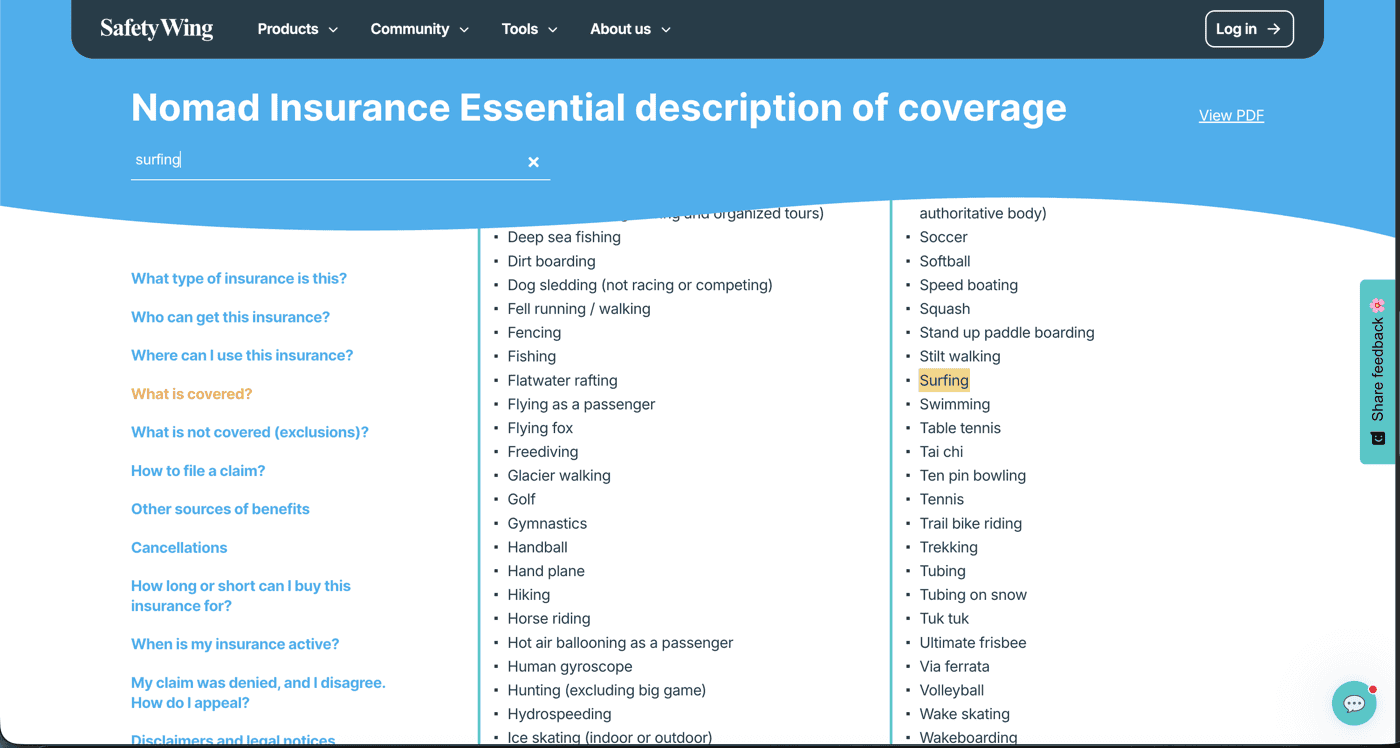
Why I picked it over the others: the price, the policy and how easy it was to sign up while I was already travelling. And honestly, the website is just nice to use. Maybe it’s the birds, haha. Plus recreational surfing is included on Essential, not sold as an extreme sports add-on (that’s true as I’m writing this, so double-check before you buy). If you want to work and surf your way around too, here’s why I became a digital nomad surfer.
My two claims (both dental)
Both of my claims were for dental crowns that came off while I was travelling. Not the most dramatic surf story, I know.
Claim 1: $60. They needed the proper documents and proof, so I went back and forth between the insurance team and my dentist a few times. It took some patience, but it got approved and they refunded the full $60.
Claim 2: $120. This time I already knew which documents they wanted, so it was easy. Full refund in about 5 days.
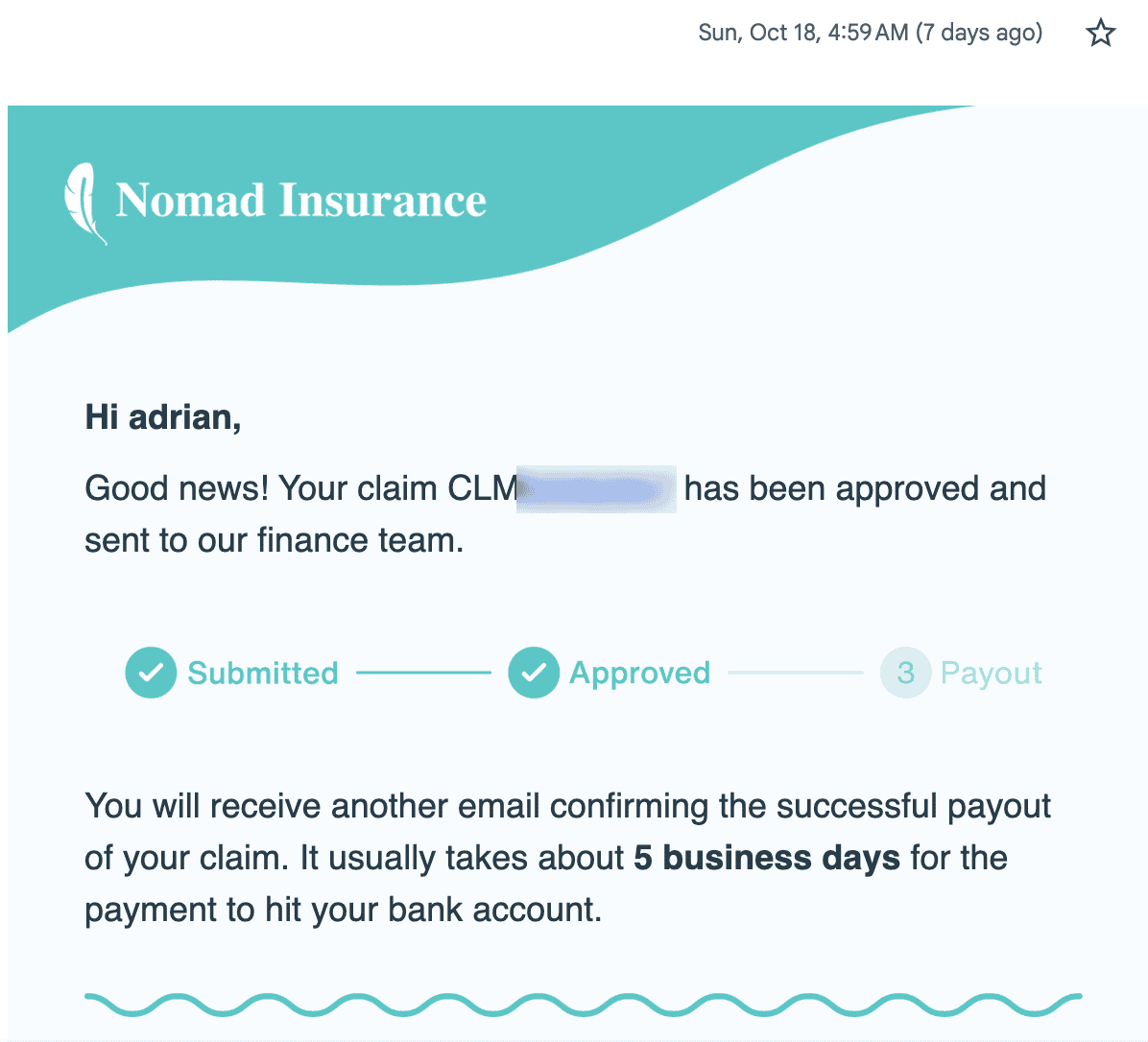
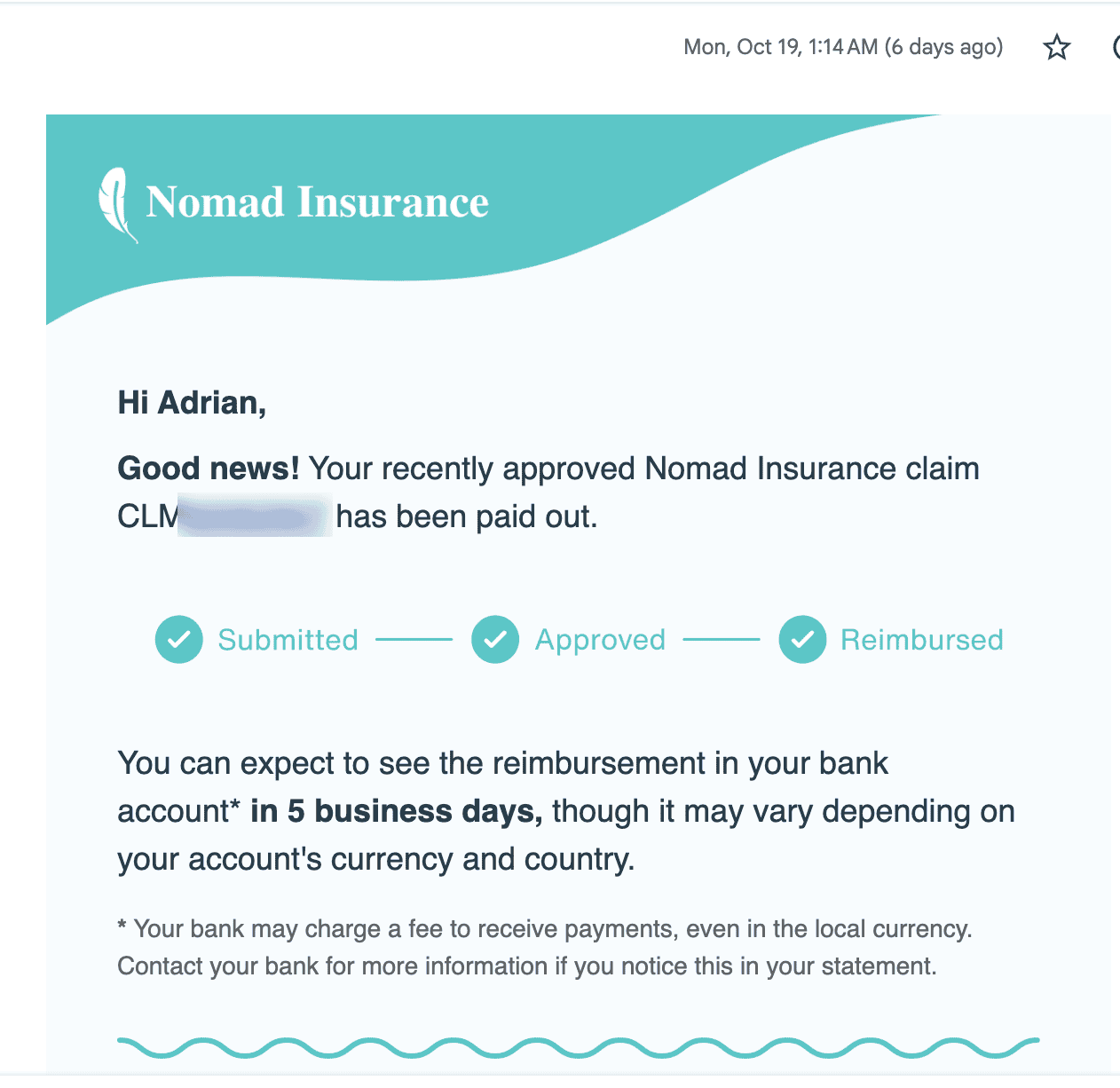
Here’s my latest claim: approved on Sunday, October 18, and marked as paid out the next day, Monday, October 19. The money then lands in your bank in about 5 business days.
Have they let me down? Not yet. The only hiccup was when I first signed up and had some wrong info in my profile. I messaged them and they fixed it within a few hours.
What you get on Essential, from SafetyWing’s own pages:
- Medical: up to US$250,000 overall (lower if you’re 65 to 69).
- Emergency medical evacuation: up to US$100,000, lifetime.
- Kitesurfing and other high-risk sports: need the Adventure Sports add-on (US$10 per 28 days).
- Claims: they say approved claims are usually paid by bank transfer within 10 business days. My second one was faster.
My mistake: skipping theft cover
Essential doesn’t cover stolen gadgets. You add that separately, and it was about $10 a month when I looked. I skipped it. Then my phone and my wallet got stolen. With the add-on, I’d probably have got the phone money back. Learn from me and tick that box.
The catch: it isn’t built to protect your boards. There’s no dedicated surfboard cover, just a checked-luggage limit. My board has never been damaged on a trip, so I haven’t tested that part. If your boards are worth more than your flight, look at World Nomads next.
Who should buy it: surfers away for a month or more, digital nomads, and anyone hopping between countries with no fixed return date.
2. World Nomads: Best for Trips With Expensive Boards

Best for expensive boards
- Surfing US: included. UK: upgrade
- Gear cover $1,000 to $3,000 (US)
- Evacuation From $400,000 (US Standard)
- Best trip length 1 to 4 weeks
World Nomads was on my shortlist. I didn’t buy it, but it does the one thing SafetyWing doesn’t do well: it covers your gear.
The cover depends on which country’s version you buy:
- US version: surfing is included. Gear protection runs from $1,000 (Standard) to $3,000 (Epic), and checked-in sports equipment counts. Evacuation goes up to $400,000 on Standard. The Explorer plan also has an optional Cancel for Any Reason upgrade, and there’s an annual multi-trip policy.
- UK version: surfing is a “level two” activity, so you add it as an upgrade. Gear protection is £1,500 (Standard) or £3,000 (Explorer), and you can list a surfboard as a high-value item for an extra fee.
The catch: it costs more than SafetyWing if you’re away for months. It also won’t pay for wear and tear, gear left unattended, or doing something reckless (like a beginner paddling out into big waves).
Who should buy it: people on a 1 to 4 week surf trip with boards they’d hate to replace. Pair it with a decent bag (here’s what I’ve learned flying with my board).
3. SportsCover Direct: Best Travel Insurance for Surfing in the UK

Best for UK surfers
- Surfing Included, even contests
- Medical £10m, £90 excess
- Equipment £200 to £600
- Age limit Up to 74
Another one from my research, not one I’ve bought. SportsCover Direct is a UK sports insurance specialist, and it covers recreational surfing and surf competitions, which is rare.
- Medical and repatriation: up to £10 million on every level, with a £90 excess.
- Sports equipment: £200 (Bronze), £400 (Silver) or £600 (Gold), each with a £90 + 10% excess.
- Age: up to 74.
The catch: those board limits are low, and the summary lists “luggage if lost by an airline” as excluded. Their FAQ also mentions a bigger equipment add-on (which also covers hired gear like surfboard rentals) that doesn’t match the plan table. Ask them to confirm the board limit before you pay. You’re also not covered if you ignore lifeguard or coastguard warnings.
Who should buy it: UK surfers who want big medical limits, or anyone entering a contest abroad.
4. Surf Travel Insurance (STI): Best for Australian Surfers

Best for Aussie surfers
- Surfing Covered automatically
- Who can buy Australians, plus US and rest-of-world options
- Gear Covered, except while in use
- Heads up New insurer from 1 Sept 2026
STI is an Australian broker that’s been focused on surf travel since 2009. Its main policy is for Australians, even if you’re already overseas, and it also has options for the US and the rest of the world.
Surfing is covered automatically. Your gear is covered if it’s lost, stolen or damaged during the trip, except while you’re using it. So a board snapped on the reef isn’t covered, but one crushed by the airline might be.
The catch: the insurer behind STI changed for policies bought from 1 September 2026 (they’re now distributed by AWP Australia, part of Allianz Global Assistance), so older reviews may describe different cover. Check the current wording.
Who should buy it: Aussies who want a surf-focused broker.
The One I’d Skip for a Surf Trip: InsureandGo

Skip for surf trips
- Surfing Included as standard
- The catch Not covered if surfing is the main purpose of your trip
- Fine for A beach holiday with a lesson or two
- Not for A dedicated surf trip
InsureandGo includes surfing as standard, which sounds great. But its own surfing page says you’re not covered if surfing is the main purpose of your trip. If you’re reading this post, it probably is.
What Surf Travel Insurance Usually Won’t Cover
Every policy has its own fine print, but these exclusions show up almost everywhere:
- Professional surfing. Recreational surfing is fine. Surfing for money usually isn’t (SportsCover Direct is the exception for competitions).
- Surfing drunk or high. That one’s on you.
- Ignoring local warnings. If the lifeguard closes the beach and you paddle out anyway, don’t expect a payout.
- Board damage while surfing, plus normal wear and tear.
- Unattended baggage and gear. A board left on the beach while you grab lunch.
- Pre-existing medical conditions you didn’t declare.
- Kitesurfing and windsurfing often need an add-on, even when surfing is included.
My surf travel insurance cheat sheet
- Search the policy for “surfing.” If it’s not named, ask before you buy.
- Check the “main purpose” rule. Some policies drop surfing on a surf trip.
- Add theft cover. I didn’t, and it cost me a phone.
- Get full paperwork up front. Ask the doctor or dentist for every document before you leave. My first claim took longer because I didn’t.
- Keep every receipt. Clinic, pharmacy, taxis to the hospital. Snap a photo straight away.
- Check your profile details. Wrong info can slow a claim down, so fix it on day one.
Insurance is the backup plan. The real plan is not getting hurt, so have a read of the surf safety rules I live by too.
Conclusion: The Best Surf Travel Insurance Is the One That Names Surfing
For me, the one I use has been the easy answer. Surfing is included, it’s a monthly fee I can stop anytime, and it paid back both of my claims in full.
If you’re flying with expensive boards, look at World Nomads. UK surfers should look at SportsCover Direct, and Aussies at STI. Whatever you pick, read the surfing and equipment parts of the policy before you pay.
🏄 Ready to sort it?
This is the one I use. Takes a few minutes to sign up, even if you’re already on the road.
FAQs
Does travel insurance cover surfing?
Sometimes, but not always. Some policies treat surfing as an extreme sport or an add-on, and some drop it if surfing is the main reason for your trip. Search the policy for “surfing” before you buy. The same goes for the cover that comes with travel credit cards.
Does SafetyWing cover surfing?
Yes. Recreational surfing is included on Nomad Insurance Essential, the plan I use. Pro surfing isn’t covered, and kitesurfing needs the Adventure Sports add-on.
How much does surf travel insurance cost?
It depends on your age, where you live and how long you’re away. I pay about $60 a month for my Essential plan. For the others, get a quote for your exact trip.
Is my surfboard covered by travel insurance?
It depends on the policy. World Nomads and STI include gear cover, SportsCover Direct has low equipment limits, and SafetyWing has no dedicated board cover. Almost none of them pay for damage that happens while you’re surfing.
Can I buy surf travel insurance when I’m already abroad?
With SafetyWing, yes. That’s how I signed up after my home country insurance ran out. Many other policies only cover you if you buy before you leave home, and some add a waiting period, so check first.
How long does a SafetyWing claim take?
My second claim was refunded in about 5 days. The first took longer because I had to go back and forth for the right documents. Get all the paperwork from your doctor or dentist up front and it’s much faster.
