6 Months Backpacking Central America With a Surfboard: What Is It Really Like

Have you ever thought about backpacking Central America? Well, to tell you the truth, I never thought about it, but somehow ended up doing it with nothing but a backpack and a surfboard. And it became my longest budget travel trip so far.
And it was EPIC!
If you didn’t know, Central America is made up of the following countries, from south to north: Panama, Costa Rica, Nicaragua, Honduras, El Salvador, Guatemala, Belize, and Mexico.
There are many things to do here, whether you like scuba diving, surfing, or exploring the Mayan ruins; it’s a place with no shortage of adventures and attractions.
If you’re like me and looking to surf along the Central American Coastline, well, you’re in for a treat. With affordable hostels, cheap food, and warm weather, this is a backpackers’ paradise.
While this won’t be an itinerary-style blog post, I will share the path I took to follow the waves and best weather windows across Central America. Oh, if you’re wondering how I ended up on this trip, just check out my about page.
So if you’re looking to see how a backpacking trip across Central America really is, keep reading!
But first, let me get this out if the way…
Is Central America Safe For Backpackers?
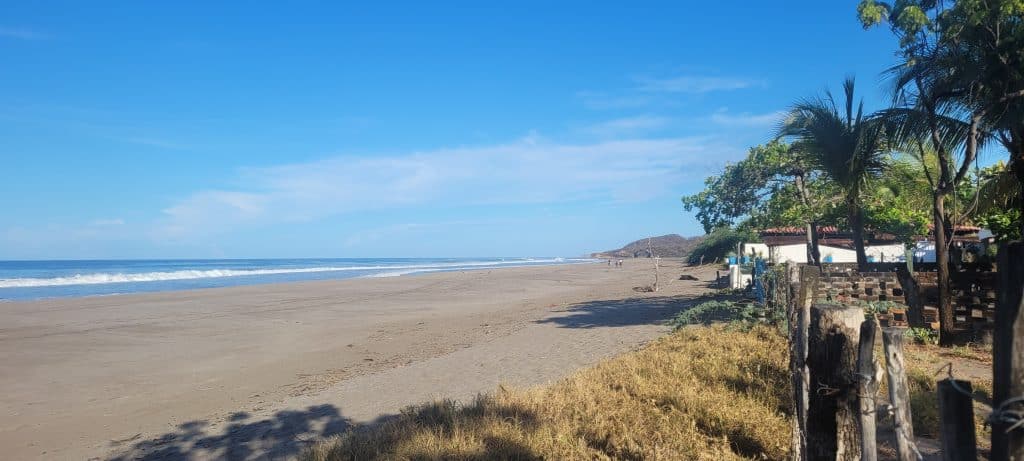
Short answer, YES!
Longer versions, if you’re looking for trouble, you’ll easily find them.
So, here’s the thing. Central America has the reputation of being very dangerous. A place where people rob you for a watch or harm you because you walked in front of their house.
I spent six months traveling with locals, hitchhiking across Nicaragua, and having one too many beers in Costa Rica. Not once I ever felt unsafe in any of the countries I visited.
That being said, you should ALWAYS be cautious and practice good common sense.
People with bad intentions can be found anywhere, regardless of the geographical location.
Don’t flash your valuables, always walk with a friend at night (or avoid walking at night altogether), and take extra caution in big cities and crowded areas.
Don’t be discouraged by the media and false stories. Central America is safe as long as you’re not doing anything stupid.
When Is The Best Time To Go Backpacking In Central America?
The best time to go backpacking in Central America is during the dry season approx between December and April. This is when it’s more likely to have sunny days, warm weather, and more attractions.
The downside, though, is that it’s more expensive during this time, as it’s the peak tourist season. So if you’re on a budget travel trip, consider avoiding these times.
The wet season, which roughly runs from May to late November, is more affordable but can be unpredictable. With serious weather hazards like hurricanes and severe storms, hitting unexpectedly in certain places.
When Is The Best Time To Surf In Central America?

The best time to surf in Central America is during the rainy season, roughly from May to October. That’s when consistent south and southwest swells light up the Pacific coast, bringing longer-period waves and more reliable surf day after day.
The Caribbean side offers waves from November to March.
What Is The Best Route to Backpacking in Central America?
The best route will depend on your preferences and, most importantly, how long you plan to stay there.
Here’s how I did it.
Backpacking Panama in January-February

Since I was chasing waves, and it was January, it only made sense to start in Bocas Del Torro, Panama. A beautiful chain of islands along the Caribbean coast of Panama.
I spent a month and a half there just surfing, partying, and chillin when there was no surf.
Absolutely amazing.
If you ever find yourself wondering what to do on a flat day, make sure you check out the beautiful Starfish Beach, go Island hopping, or take a kayak tour.
Surfing in Bocas del Toro offers a variety of waves that suit all levels. Beginners can find a great spot on Isla Carenero, a $1 (at the time) taxi boat ride from the main island. While more advanced surfers can find heavier waves on the main island, Isla Colón. Spots like Playa Paunch and Playa Bluff are the most popular, but there are more to discover.
Since the surf season starts in May approx, I had to wait a bit before I chase more waves. And I needed to rest a bit, since I had been surfing twice a day for more than a month.
It was a great time to chill in Boqute. Usually, people go there to hike the famous Volcán Barú. I ended up skipping this activity due to the weather (and a bit of laziness, tbh).
But the town has a great vibe and plenty of small local shops that offer everything from food to classic souvenirs you can take home as a memory or a gift.
Backpacking Costa Rica In Feb-March
Crossing the border from Panama to Costa Rica is pretty straightforward. You can do it with a company that offers these services; I’ll try to link to one.
Or, for the real backpackers out there, you can DIY it.
Which is what I did.
Basically, you catch a bus to Paso Canoas, hop off, and ignore all the people that are trying to “help” you cross the border.
Then you head to the immigration office, have your passport stamped, and continue to Costa Rica, where you need to have it stamped again to enter a new country.
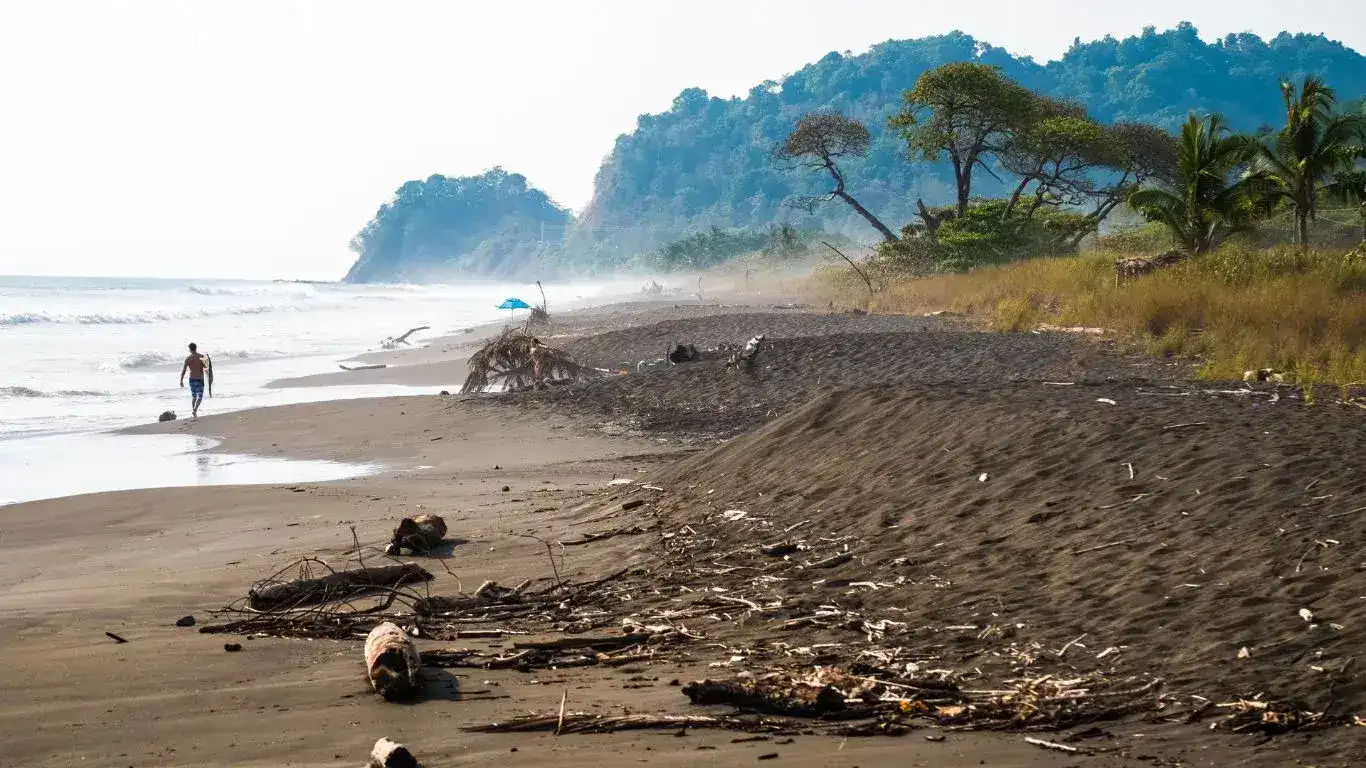
From Paso Canoas, we took a bus to Domonical, a small beach town centered on surfing. There was not much to do in town besides surfing, eating in different restaurants, and drinking good coffee.
However, once you go out of town (take the bus or a guided tour), there are plenty of things to explore in the area.
For example, Manual Antonio National Park, Nauyaca Waterfall Nature Park, and Parque Nacional Marino Ballena, better known as Punta Uvita.
On another trip, I spent almost four months on the Nicoya Peninsula. If you have more time in Costa Rica, check out my guide to surfing in Santa Teresa.
Backpacking Nicaragua In April

After a month of discovering Costa Rica, it was time to move on to the next country.
Nicaragua is known for many active volcanoes, chill vibes, and, in the surfing world, 300 days of offshore winds. Courtesy of Lake Nicaragua.
The border crossing is similar to the one between Panama and Costa Rica. Just make sure you stamp your passport when entering and leaving. Trust me, they won’t look for you to do it!
For my first stop, I headed to Playa El Gigante. A chicken bus ride from the closest town, Rivas.
A quiet fishing village about an hour away from Rivas. Or 2-3h from the bigger city, San Juan Del Sur.
The main reason to go there is to surf the famous Playa Colorado, located north of Playa Gigante, and it’s the closest place to stay on a budget. It’s about a 30 min walk, but it’s so worth it!
Beginners can enjoy the waves of Playa Gigante, and there’s a beach that stays flat most of the time, which is perfect for swimming.
Some of the other places I’ve been include Ometepe Island, Poppoyo, and the city of Granada.
Nicaragua is huge, and there are many things to do there beyond surfing.
Hiking an active volcano, dune surfing a dormant volcano, and sleeping in a treehouse are just some of those things. Check out my full Nicaragua itinerary.
Backpacking El Salvador In May

May is officially the start of the surf season in Central America. Luckily for me, it’s my birthday month. Being a paradise for right-hand point breaks, I knew this would be the best birthday of my life, and I had to gift myself a stay in El Salvador during peak season.
Getting there wasn’t easy though.
The budget-friendly option was to take a bus from Mangua, Nicaragua, to San Salvador. A 12-hour journey that would cross Honduras and take us to El Salvador.
The problem? We couldn’t book the ticket online.
After going there in person, they told us to wait for the next bus, which was at 1 AM (about 6-8 hours later), and hope there was an empty spot. We took a taxi back to our Airbnb, explained the whole situation, and she let us stay there until the night passed.
It’s amazing how many people are willing to help you when you’re travelling.
At the end, we took a taxi to the bus station, and there were 2 seats left, so we hopped on with a smile and a big sigh of relief. Now, I can’t remember exactly why we couldn’t book the bus, as I’m writing this blog 4 years later (talk about procrastination), but if you do end up taking the bus from Nicaragua to El Salvador, make sure to check with the company before.
Getting to San Salvador
Once we arrived to San Salvador, we had to try the famous poposas. Then we took an Uber to Playa El Tunco.
A famous beach town known for the point break El Sunzal and pebble beach break La Bocana. Surfing-wise, this is paradise!
When the waves are not too big, El Sunzal is great for beginners and intermediates, offering a mellow, long ride. While La Bocana stays punchy and fast, even if it’s smallish.
Now, when you get bigger swells, El Sunzal is a great playground for advanced surfers! It basically works on all tides but is best in mid-tide. Note that on higher tides and bigger swells, the seawall generates a dangerous backwash that makes it difficult to come in.
I remember one time after a heavy rainfall and a big swell, the river opened up so you had to cross it first to get to the other side and walk to the point. But the tide and waves were so big that you had to time it and make a run for it, otherwise you’ll be swept back to the ocean. Not a good feeling.
There are many other surf spots in El Salvador to explore, and plenty of activities to do. Some of which include the Santa Ana Volcano hike and the Tamanique Waterfalls. But I’ll leave it for a different blog post.
Backpacking in Guatemala in June


After almost 4-5 months of pure surfing and wave chasing, it was time to go inland, away from the ocean. My ex at the time wasn’t a surfer, and we had to balance things out.
We took a bus again from Santa Ana after spending a couple of days in Guatemala City, and then to Antigua. A beautiful Spanish colonial city in the heart of Guatemala.
The goal? To hike a dormant volcano to watch an active one in front of it. Sounds weird right? Well, you HAVE to go there.
IF YOU TAKE ANYTHING FROM THIS BLOG POST, LET IT BE THIS– DO THE ACATENANGO VOLCANO HIKE.

Hopefully, I made my point.
Anyway, the hike itself is very challenging. It’s a 4-hour hike on a steep mountain with few flat spots. You could have a horse take you up (yeah im serious) but i have no idea how much it will cost.
We paid about 40-50$ for the whole experience. It includes the bus ride to and from your accommodation, meals covered, warm clothing, and, obviously, the tent and other gear once you arrive at base camp. Plus, you have guides with years of experince on these mountains.
You can hike up the mountain on your own and just rent a tent from one of the many base camps, but honestly, I’d definitely recommend supporting the locals and booking a guided tour. This is coming from someone who never does guided tours. But here it felt different, it was like we were with a friend who happened to be from there and knew a spot.

From Antigua, there are many spots to visit or even head to next. Lake Atitlan makes a good day trip.
But I was more interested in Mayan culture, so we headed to Tikal, the heart of ancient Mayan civilization. It really felt like an Indiana Jones movie for me. The ruins, pyramids and how the forest has taken over all the structures all made it feel like a movie. But this was real, and honestly, one of the best experiences I had in Central America.
If you’re considering visiting Tikal, stop thinking about it and go!
Backpacking Mexico in July

From Tikal, you can go to Mexico or Belize if you want to continue travelling. I had to choose Mexico over Belize as my budget wouldn’t allow me to travel both. But Belize is a beautiful country that I wish to visit one day.
Getting to Mexico from Tikal was fairly easy as I took a flight to Cancun. You could go the budget-friendly way and take a bus to the closest border, then another to your desired destination. And that was an option for me.
But given the fact it was my last destination on my backpacking trip in Central America, I figured I’ll take a plane to save me some time on the road. Just know that distances are vast, and any bus you’ll take will be a long journey.
Cancun felt a little bit too Americanized (if that’s a word). You know what I mean, big food chains, nightclubs, and flashing lights everywhere. Oh, and did I mention the buses of college students? Yup, it definitely felt like a version of Vegas.
After a couple of days, I took the bus to Playa Del Carmen. A smaller town, still a bit touristy, but it has the Mexican soul in it. The beaches are picture-perfect, and don’t forget to visit a cenote. It’s basically a freshwater pool, usually underground, though some are above ground.
And if you’re really feeling adventurous, you can dive into one or more of those. I had a great time diving into a 30m-deep cenote; it felt like entering a black hole. Scary and exciting at the same time. Some people even said they saw a crocodile while diving in one of the cenotes, how crazy is that?

While you’re there, visit Tulum. A much quieter town tailored to couples and romantic getaways. It has some of the most beautiful beaches you’ll see, probably anywhere in the world.
However, keep in mind that during these months (Jul-August), seaweed is commonly found all over the beaches as it gets detached from the ocean floor, surfaces and the wind carries it to the beach. It’s a natural phenomenon crucial to the marine environment.
Conclusion Of My Central America Backpacking Trip

Backpacking in Central America changed my life forever. For me, this was more than a backpacking trip: I surfed my soul out, hiked active volcanoes, dived into an underground pool, and traveled with a soulmate I met on the road.
This trip taught me that life isn’t about what you have or how much money you make; it’s about who you’re with and what makes you smile every day.
I saw people living in a mud house with more livelihood than I and many others I know, even though we had “more” in life. This alone was worth every single minute and dollar spent on this trip.
Now, I wish I could break down the exact costs, but unfortunately, it was a long time ago (4 years), and I can’t remember the exact prices of everything. That being said, it’s probably slightly more expensive now, given the current state of the economy and the rising popularity of many places in Central America.
So, what are you waiting for? Book that flight and get started on a trip of a lifetime!
Faq- Backpacking Central America
Is 2 months enough for Central America?
Yes, 2 months can be enough for Central America. While it can be a bit tight if you want to go to all the countries, it’s doable. Taking flights instead of buses will make it easier and will help you gain more time in each country but it will be more expensive.
Is 10,000$ enough to travel for 6 months?
Yes, 10,000$ is enough to travel Central America for 6 months. That being said, you won’t be dining in high end resturans and sleeping in luxury hotels every single day. But with this budget, you’ll have enough to sleep comfortably in private rooms and dine out at least 2-3 times a week. Keep in mind that local restaurants are more affordable (and often better) than Western restaurants.
Is It Easy To Backpack Central America?
Yes, it’s easy to backpack Central America. The main way to travel between countries is by bus. There are many companies, and prices are relatively low. Keep in mind, if you travel with a surfboard (like me) they usually charge extra and carrying it around is not that pleasent. But it’s all worth it once you hit the waves!
Keep reading: One of my favorite memories from Panama? How Red Frog Beach inspired my first tattoo.